post
10 Fun Ways to Teach Arrays: Free 2nd Grade Array Worksheets Inside!
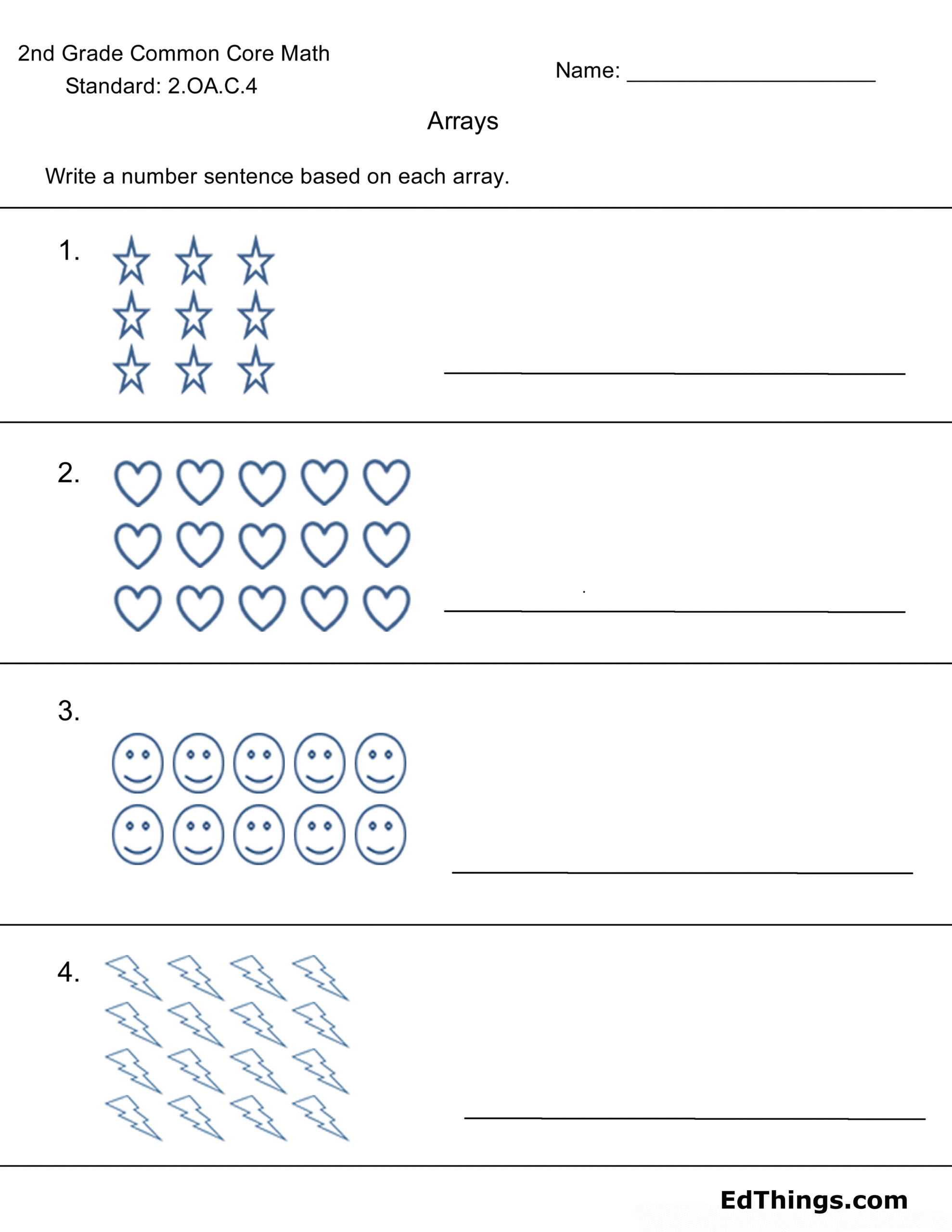
Arrays - A pattern of equal rows or Columns
Arrays might seem like a simple math concept, but they play a powerful role in helping children understand how numbers work together. When students begin exploring multiplication and division, the concept of arrays gives them a concrete and visual foundation. This is why using array worksheets for 2nd grade is one of the most effective ways to introduce this skill. With repeated practice and engaging activities, students can master the art of grouping, pattern recognition, and early algebraic thinking—all through arrays.
What Is an Array in 2nd Grade Math?
In second grade, students are introduced to arrays as arrangements of objects, pictures, or numbers in rows and columns. These visual tools help students understand the concept of equal groups. An array is essentially a model of repeated addition and the early stage of learning multiplication.
For example, a 3-by-4 array can be read as 3 rows of 4, or 4 + 4 + 4 = 12. This helps students see the connection between addition and multiplication. Array worksheets for 2nd grade are designed to reinforce this understanding through guided practice.
Why Arrays Are the Building Blocks of Multiplication
Arrays provide a visual strategy for solving multiplication problems by helping students recognize equal groupings. Before students begin memorizing math facts, they need to understand what those facts represent. Using arrays lets children break down complex problems into manageable parts.
The Common Core standard 2.OA.C.4 specifically targets the ability of students to use addition to find the total number of objects arranged in rectangular arrays. The goal is to prepare students for future math by giving them tools to visualize and explain patterns in numbers.
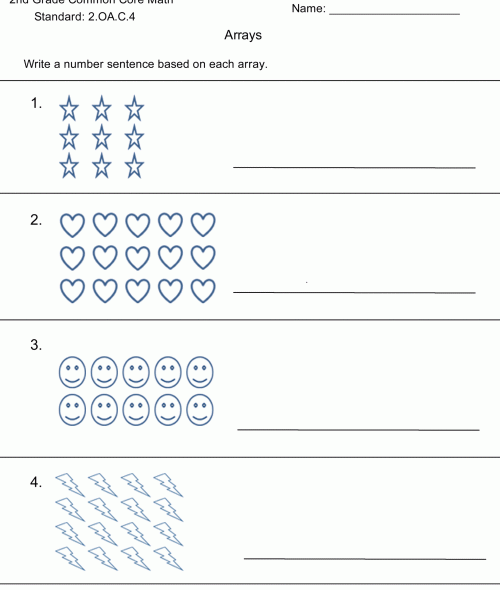
Download the free worksheet here: Array Number Sentence 2.OA.C.4 Worksheet.
10 Fun Ways to Teach Arrays to Kids
1. Use Manipulatives
Give students hands-on materials like snap cubes, buttons, or counters. Ask them to form groups with equal rows and columns. This physical interaction makes arrays more real and memorable.
2. Draw Arrays on Graph Paper
Provide students with graph paper and ask them to draw dots or shapes in array patterns. This also helps them develop spatial reasoning while reinforcing math skills.
3. Go on an Array Scavenger Hunt
Challenge students to find real-life arrays around them—egg cartons, muffin trays, window panes, or boxes of crayons. They can take photos or draw pictures of what they find.
4. Play “Array Bingo”
Create Bingo cards with array problems and matching pictures. Call out number sentences, and students mark the correct array. It's a game-based way to build fluency.
5. Teach Arrays With Food
Use snacks like crackers, cookies, or cereal pieces. Have students build edible arrays before enjoying their treat. This is especially effective for younger learners.
6. Art With Arrays
Provide stamps or stickers and let students make pictures out of rows and columns. Have them write number sentences to match their designs. Creative activities boost engagement.
7. Grouping Classroom Supplies
Let students organize classroom items—pencils, markers, or books—into equal groups. Then challenge them to describe the array in mathematical terms.
8. Practice With Array Worksheets for 2nd Grade
Download and print free array worksheets for 2nd grade that let students solve problems by counting rows and columns, completing number sentences, and even creating their own arrays.
9. Use Digital Games
There are several online games designed to reinforce the array concept. These allow students to get instant feedback and practice in a fun, interactive format.
10. Solve Real-Life Word Problems
Create simple story problems involving arrays. For example: “Lila planted 4 rows of flowers with 5 in each row. How many flowers did she plant?” Encourage students to draw arrays to solve.
Using the Free Array Worksheet
This free downloadable worksheet provides a variety of problems that walk students through identifying arrays, completing repeated addition, and writing number sentences. Teachers and parents can use it as morning work, classwork, homework, or review.
The worksheet is great for reinforcing essential skills while offering visual and written practice. It's best to guide students through the first few problems, then encourage independence with the remaining ones.
Common Mistakes Students Make With Arrays
Even with practice, students can make a few common mistakes when working with arrays. Here’s what to watch for:
- Confusing rows and columns: Some students mix up horizontal and vertical groupings. Consistent vocabulary and visuals help here.
- Incorrect counting: Students may skip or miscount elements. Using fingers or pointing tools can help them track properly.
- Misalignment: When drawing arrays, uneven rows can confuse the eye. Encourage students to use graph paper or trace lines.
- Writing the wrong number sentence: Make sure students understand whether they are grouping by rows or columns before writing repeated addition sentences.
Arrays and Computer Science: A Surprising Connection
In computer science, the term “array” refers to a collection of elements stored in a specific order. It might sound advanced, but the foundational concept is exactly what kids are learning in 2nd grade—grouping data in a structured way.
By teaching children how to use array worksheets for 2nd grade, you're planting early seeds for logical thinking and problem-solving. These skills will serve them well in future subjects like programming, robotics, and advanced math.
Who Should Use These Worksheets?
While the worksheet is designed for 2nd grade, it's also useful for:
- 1st Grade Students who are ready for a challenge.
- 3rd Grade Students who need a review of basic multiplication concepts.
- Homeschool Families looking for supplemental math resources.
- Teachers seeking independent practice or math center activities.
Create Your Own Array Worksheets
Want to go even further? Encourage your students to create their own array worksheets. Have them draw arrays and write matching number sentences. Then they can exchange with a partner and solve each other’s problems.
This not only deepens understanding but fosters peer collaboration and creativity. If you're looking for even more customizable resources, check out our full set of worksheet generators on our math tools page.
Conclusion: Arrays Build a Math Foundation That Lasts
Introducing arrays in 2nd grade is one of the best ways to prepare students for multiplication and beyond. When students get to use array worksheets for 2nd grade alongside fun and interactive activities, they gain confidence and fluency in their math skills.
Download the free worksheet today and give your students the practice they need to master this important math concept. Whether you're a parent, teacher, or homeschooler, this resource is a great way to help your child succeed in math.
Want to explore more strategies for teaching foundational math? This Edutopia article explores additional techniques backed by research.
 Download Free Worksheet
Grade often used by:
1st Grade | 2nd Grade | 3rd Grade
Subject:
Math | Operations and Algebraic Thinking
Standards:
Common Core State Standard:
Standard 2.OA.C.4